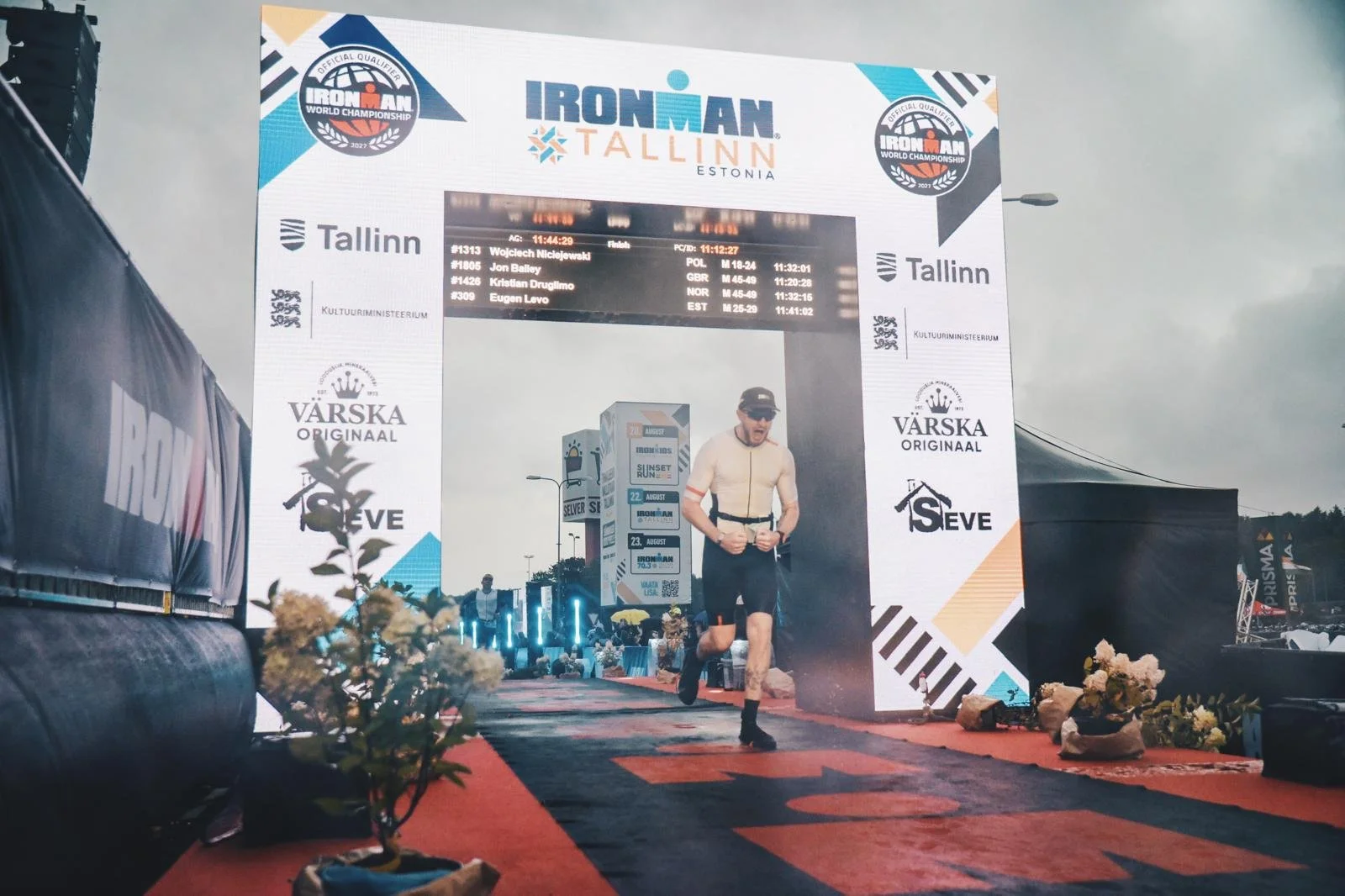
Completing an IRONMAN is an extraordinary physical challenge.
A 3.8km swim. A 180km bike. A marathon.
But getting an athlete successfully to the finish line isn't simply about accumulating more swimming, cycling and running.
It's about preparing the body to perform, fuel, adapt and recover.
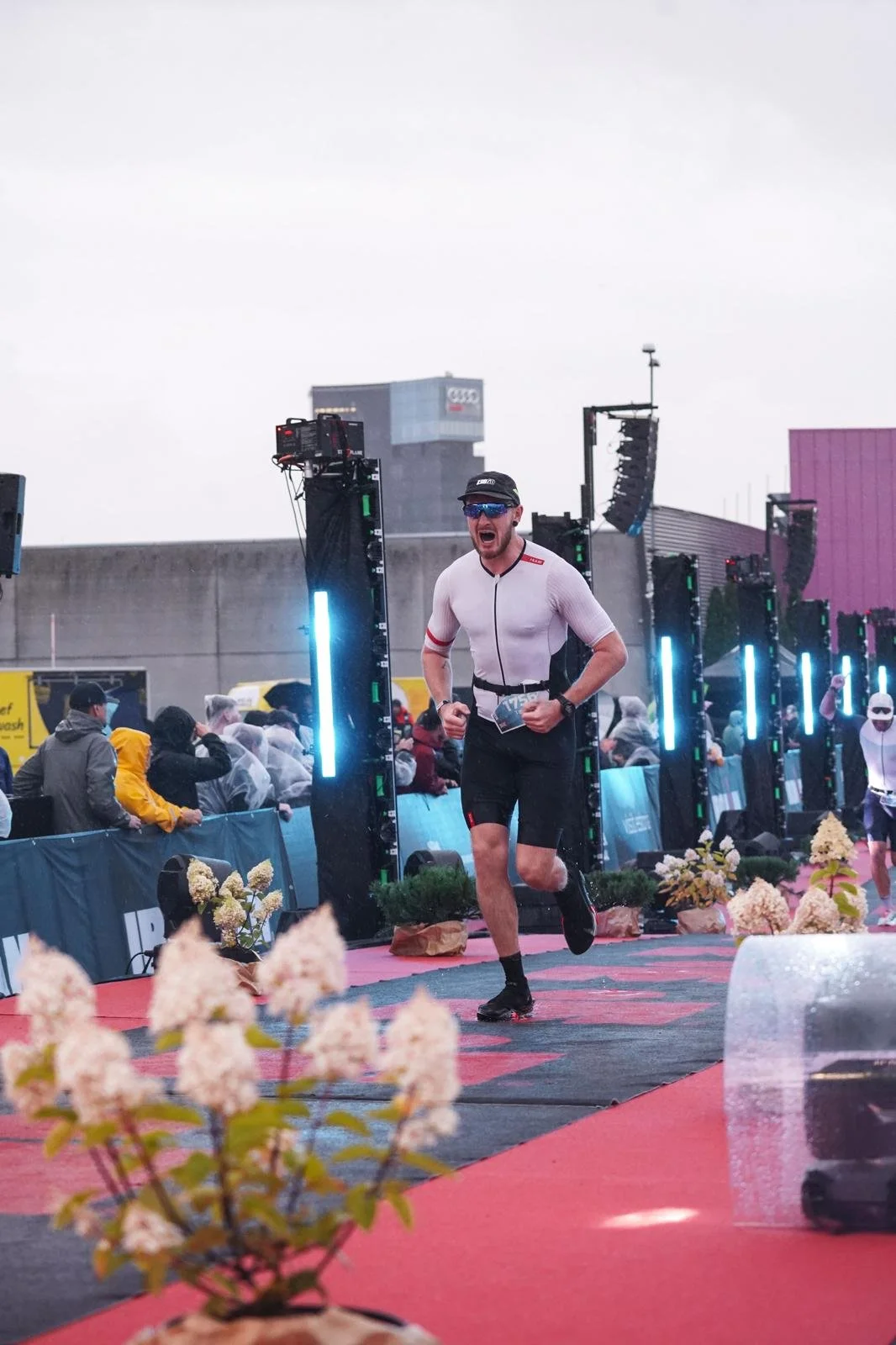
Over the past few months, I've been supporting Taylor as he built towards completing IRONMAN Tallinn, with the Eastbourne Triathlon providing an important milestone along the way.
The journey has involved training and tapering, but also nutrition strategies, carbohydrate loading, race-day fuelling, adapting plans to the weather, managing the inevitable niggles that come with endurance training and, importantly, knowing when the body needs recovery rather than another training session.
Now Tallinn is complete, the focus changes again.
Recovery comes first.
Then there's a very different challenge on the horizon: getting his 5K down to sub 20 minutes, before ultimately turning his attention to a 100-mile event.
And that variety perfectly illustrates something we believe strongly at Unstoppabl:
Great coaching isn't simply about getting fitter. It's about preparing the athlete for the challenge in front of them.
You Can't Out-Train Poor Fuelling
You can complete every training session perfectly and still compromise your race if you arrive at the start line under-fuelled.
For long-distance endurance events, carbohydrate becomes particularly important because our body's glycogen stores are limited.
The longer the event, the greater the challenge.
That means nutrition isn't something we suddenly think about on race morning.
It starts in the days beforehand.
For Taylor, we used a structured carbohydrate-loading strategy leading into his events.
At approximately 79kg bodyweight, that meant significantly increasing carbohydrate availability in the final days before racing while reducing foods that could unnecessarily increase digestive load.
Foods such as rice, pasta, bread, bagels, cereal, bananas and carbohydrate drinks make it possible to increase carbohydrate intake without simply eating enormous quantities of food.
The objective isn't to eat everything in sight.
It's much more deliberate:
Start the race with the body's carbohydrate stores as full as practically possible.
That gives the athlete the best chance of executing the race they've trained for.
Carb Loading Isn't Cheating – It's Preparing Your Body to Perform
There can still be a misconception that athletes should simply eat normally before an endurance event and rely on race nutrition once they start.
For something as demanding as an IRONMAN, that's leaving performance on the table.
Carbohydrate stored as glycogen in the muscles and liver provides readily available energy during exercise.
So we deliberately increased Taylor's carbohydrate intake during the final days before competition.
Race morning then continued the process.
Breakfast was timed several hours before the start, followed by carbohydrate closer to the swim using SIS Beta Fuel gels containing 40g carbohydrate.
The important point is that the race nutrition strategy didn't begin when Taylor climbed onto the bike.
Fuelling the race had already started days earlier.
3.8km Swim, 180km Bike, 42.2km Run: You Need a Fuelling Strategy
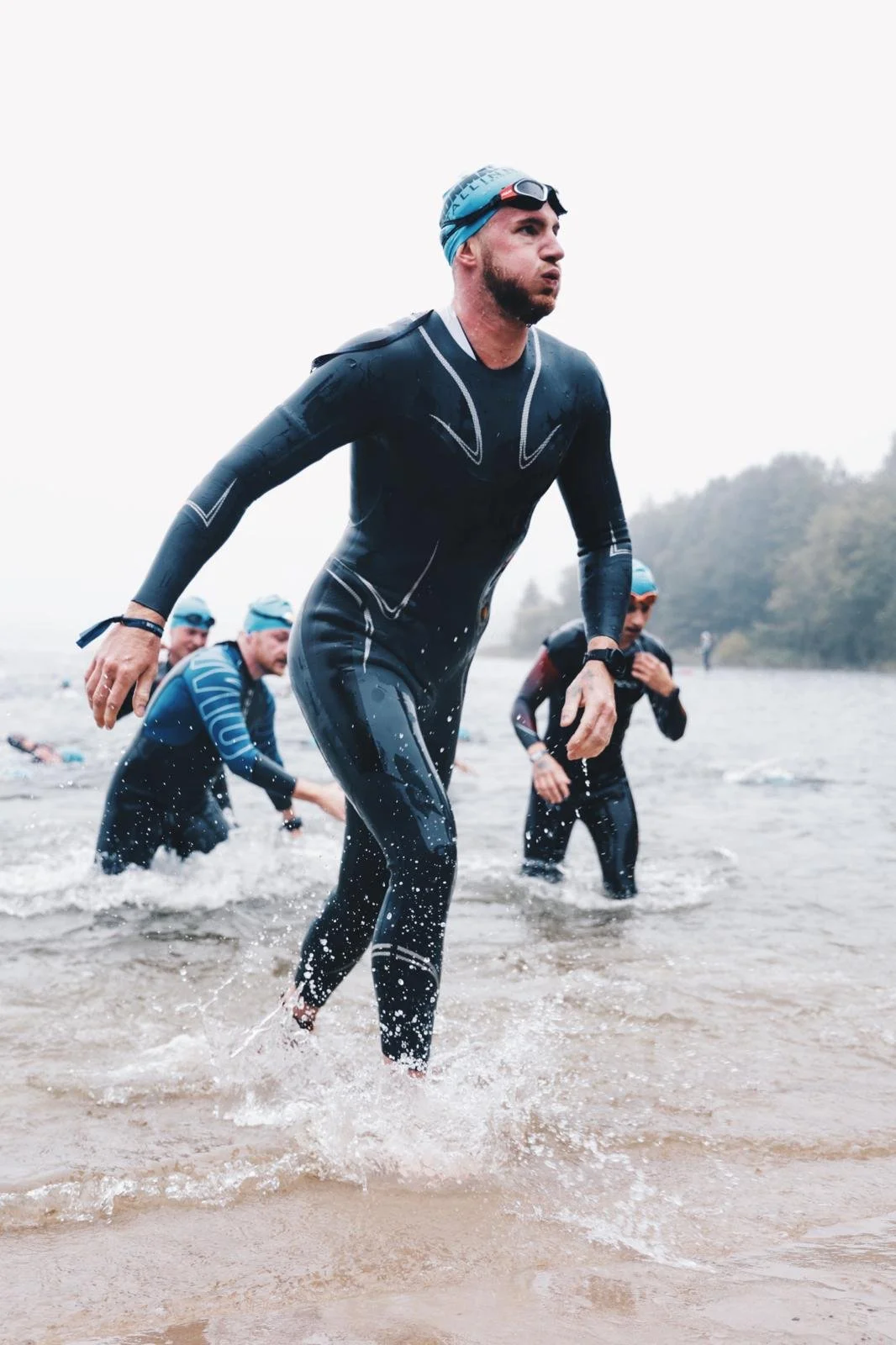
Once an IRONMAN starts, nutrition becomes a continuous process.
Taylor was expecting approximately:
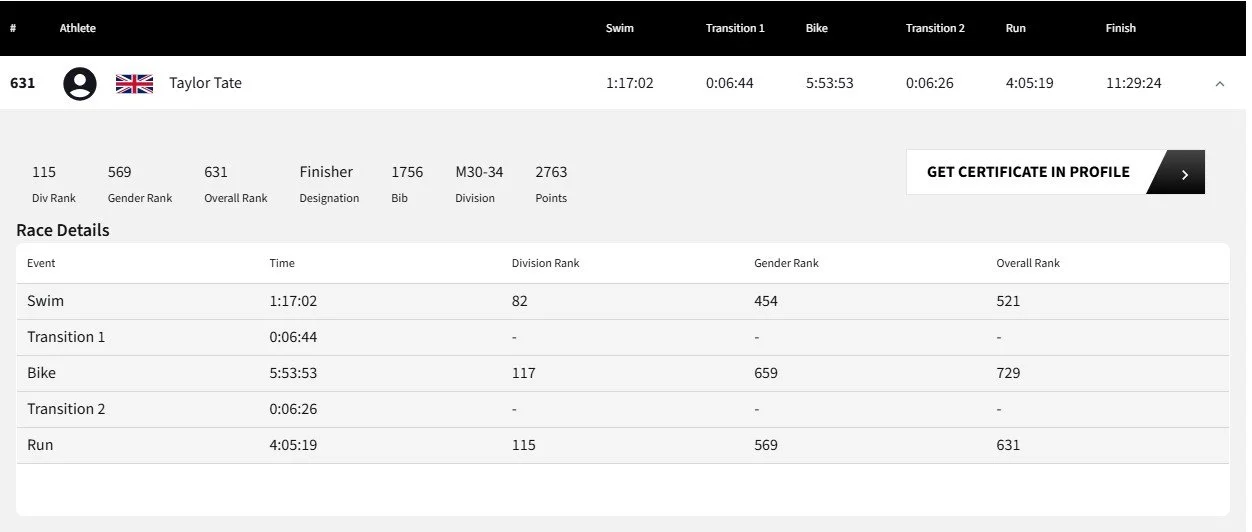
1 hour 20 minutes swimming
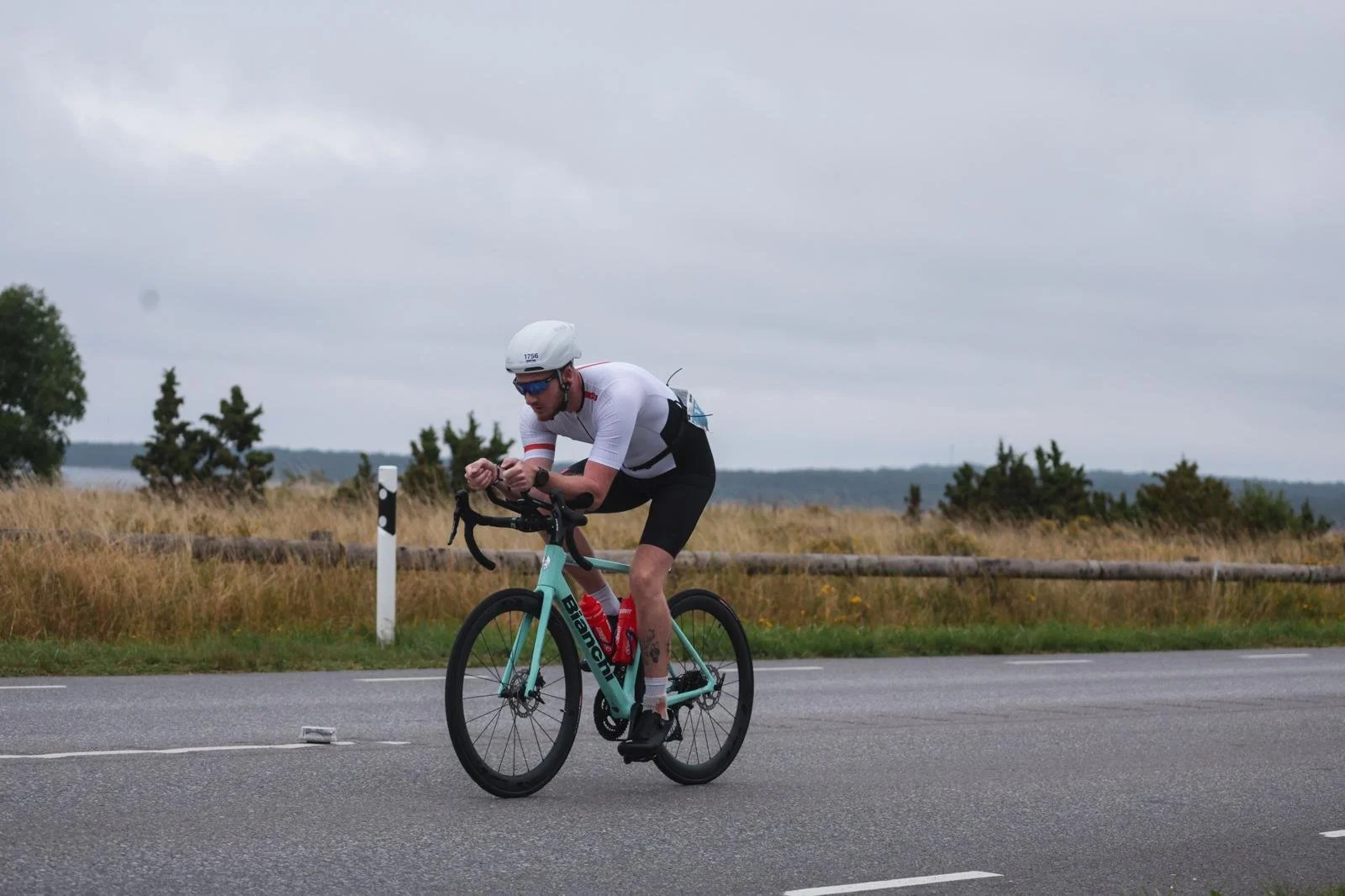
Around 6 hours cycling
Under 4 hours running
Add transitions and the inevitable variation that comes with racing and you're asking the body to perform for the best part of half a day.
You cannot replace all the energy being expended.
The goal instead is to provide enough carbohydrate, fluid and electrolytes to support performance without overwhelming the digestive system.
For the bike we planned approximately 85–90g of carbohydrate per hour, using products Taylor had already been accustomed to, including Styrkr Mix90, SIS Beta Fuel, SIS Beta Fuel Electrolyte and Styrkr rice bars.
The marathon required another adjustment.
Rather than simply continuing to force carbohydrate in at the same rate, the target moved towards approximately 60–75g per hour.
That's the difference between having nutrition and having a nutrition strategy.
What you consume, when you consume it and whether your body can tolerate it all matter.
Eastbourne at 27°C vs Tallinn in Rain and Wind: Same Athlete, Different Strategy
This was one of the most useful comparisons during Taylor's journey.
Eastbourne was expected to be around 27°C with relatively little cloud cover.
Heat changes everything.
Sweat losses increase. Fluid requirements rise. Sodium losses can become more significant. Core temperature becomes another factor affecting performance.
The nutrition and hydration strategy therefore had to reflect those conditions.
Tallinn presented almost the opposite challenge.
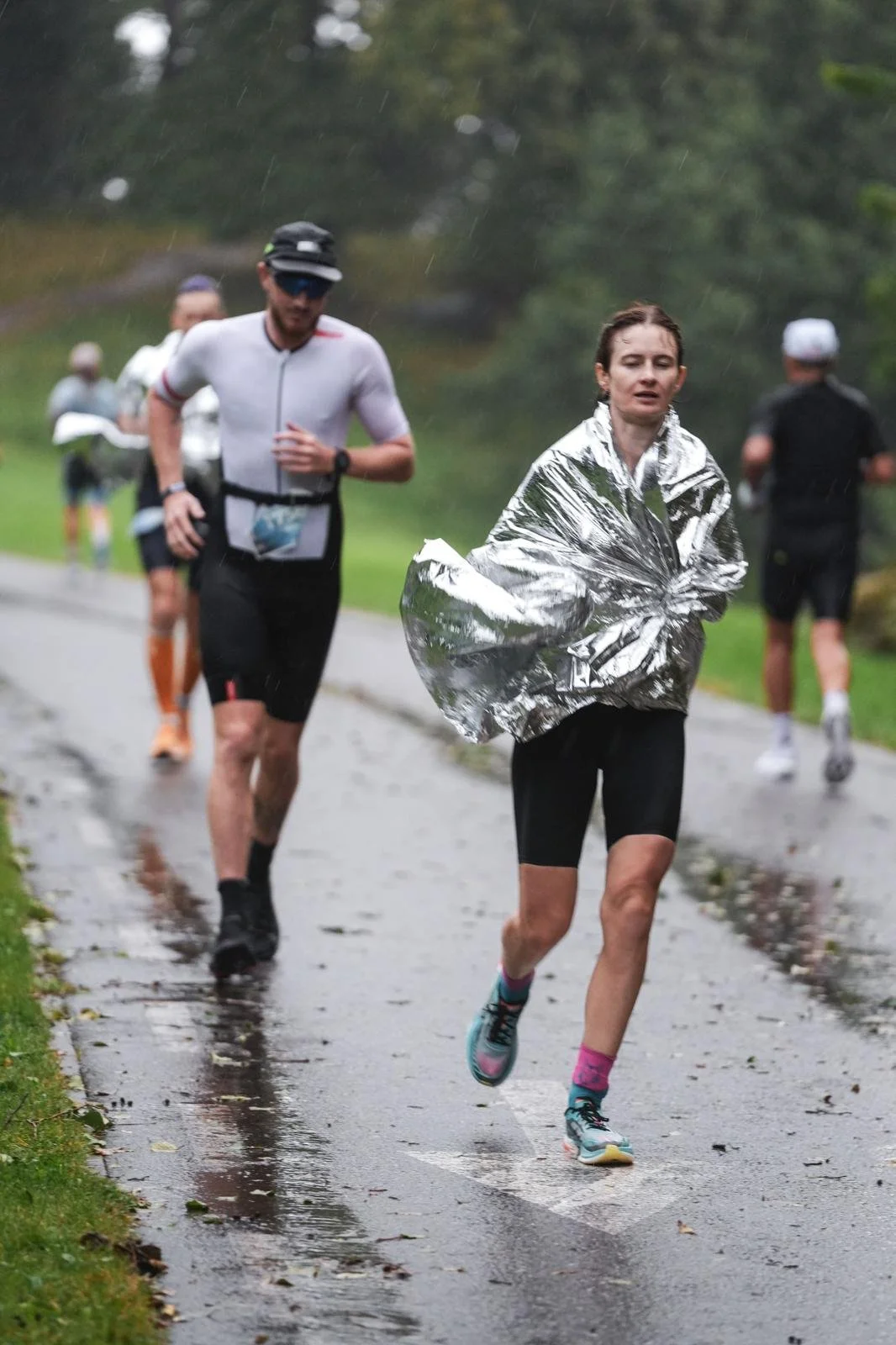
Rain, cooler temperatures and potentially strong winds meant we couldn't simply copy and paste the Eastbourne strategy.
Fluid requirements could be lower, while the wind could make the bike significantly harder and potentially longer.
And there's an important coaching lesson here.
A race plan shouldn't be so rigid that it stops the athlete responding to the race that's actually happening.
Stop Chasing the Garmin: Race the Conditions in Front of You
Taylor originally had ambitions of going sub-12 hours in Tallinn. Read until the end to see if he made it.
Then the forecast changed.
Heavy rain and potentially strong winds meant expectations needed to change with it.
That doesn't mean abandoning ambition.
It means understanding what you can and cannot control.
Trying to maintain a predetermined cycling speed into a significant headwind could mean producing substantially more power than planned.
You might save a few minutes on the bike.
But you could pay for them many times over during the marathon.
So the focus becomes effort rather than blindly chasing speed.
Protect the legs.
Keep fuelling.
Keep drinking appropriately.
Stay disciplined.
And give yourself the opportunity to run when you get off the bike.
Sometimes the smartest race is the one where you're prepared to change the plan.
The Best Race Nutrition Is the Nutrition You've Already Practised
Race day is not the time to suddenly discover whether your stomach tolerates 90g of carbohydrate per hour.
The digestive system can be trained too.
That's why nutrition needs to become part of endurance training rather than something considered during race week.
Long rides and brick sessions provide opportunities to practise:
What can I tolerate?
How frequently do I need to eat?
Can I still take carbohydrate after four or five hours?
How much fluid do I actually need?
What happens when I start running?
You learn what works before the result matters.
By race day, fuelling should feel like another part of the race plan rather than an experiment.
Training Plans Should Change When Your Body Talks to You
Another important part of Taylor's preparation has been dealing with the little niggles that inevitably appear during high training volumes.
There's an important distinction between being committed to a training programme and becoming a slave to it.
A spreadsheet doesn't know how your body feels that morning.
Good coaching requires feedback.
When something hasn't felt right, we've looked at the likely cause and adapted accordingly.
Sometimes that has meant specific stretches or mobility work.
Sometimes corrective exercises.
Sometimes changing an exercise or adjusting training load.
The objective isn't always simply to remove the discomfort.
We want to understand why it appeared and what we can change to reduce the likelihood of it becoming a bigger problem.
Ignoring a warning sign because Tuesday's programme says you have to complete a particular session isn't discipline.
Sometimes the disciplined decision is changing the session.
Tapering Isn't Losing Fitness – It's Revealing the Fitness You've Built
This can be one of the hardest concepts for motivated endurance athletes.
After months of training, suddenly we're asking them to do less.
That can feel uncomfortable.
Athletes worry they're losing fitness.
They aren't.
A properly structured taper reduces accumulated fatigue while maintaining enough training stimulus to keep the body ready to perform.
Volume comes down.
Key movements and some intensity remain.
Recovery increases.
Nutrition remains important.
Sleep becomes even more valuable.
The goal isn't to become fitter during race week.
The work has already been done.
The goal is to arrive at the start line capable of expressing that fitness.
Crossing the Finish Line Doesn't Mean Recovery Has Finished
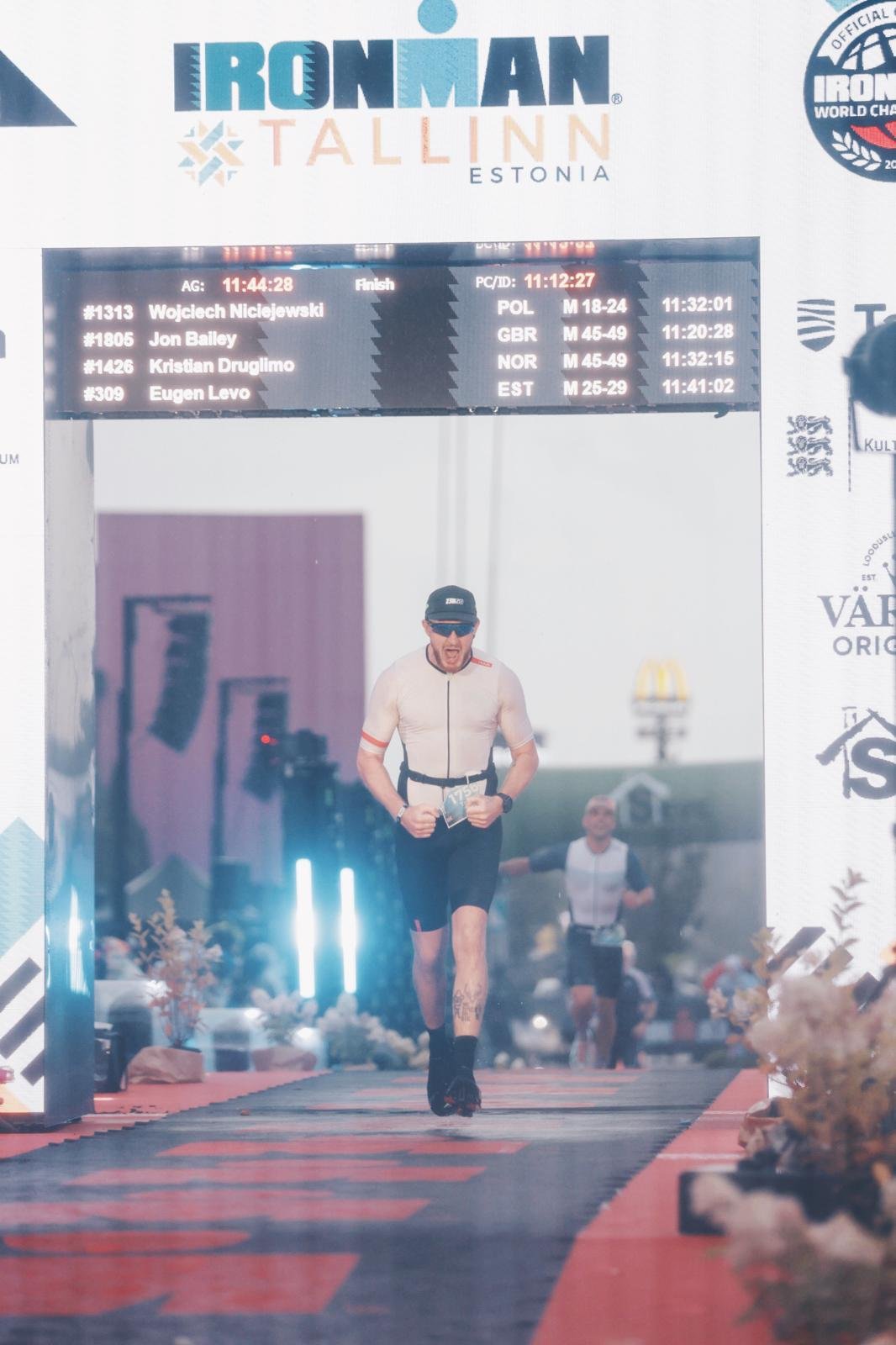
There's another mistake endurance athletes commonly make.
They finish the race, take a few easy days and immediately start thinking:
What's next?
But completing an IRONMAN creates enormous stress.
Muscles, tendons, joints, glycogen stores, the immune system and nervous system have all been challenged.
And just because walking downstairs starts feeling normal again doesn't necessarily mean everything has fully recovered.
Post-race nutrition therefore matters.
The immediate priorities are straightforward:
Carbohydrate to replenish depleted glycogen.
Protein to support muscle repair.
Fluid and electrolytes to replace losses.
And then plenty of normal, nutrient-dense food over the following days.
Recovery isn't something that happens with one protein shake at the finish line.
It's a process.
Your Body Gets Fitter During Recovery – Not Just During Training
This is something we continually reinforce with the athletes we coach at Unstoppabl.
Training provides the stimulus.
Recovery allows the adaptation.
After an IRONMAN, that becomes particularly important.
There is no prize for seeing how quickly you can complete your first hard session afterwards.
Initially, the priority should be rest, sleep, nutrition and gentle movement.
Then activity can gradually return.
Easy swimming.
Walking.
Easy cycling.
Short, easy running when the body is ready.
Strength training can progressively return too.
The key word is progressively.
Because there's a big difference between feeling motivated to train and being physiologically ready to train.
From IRONMAN to a 20-Minute 5K: Now the Training Changes Completely
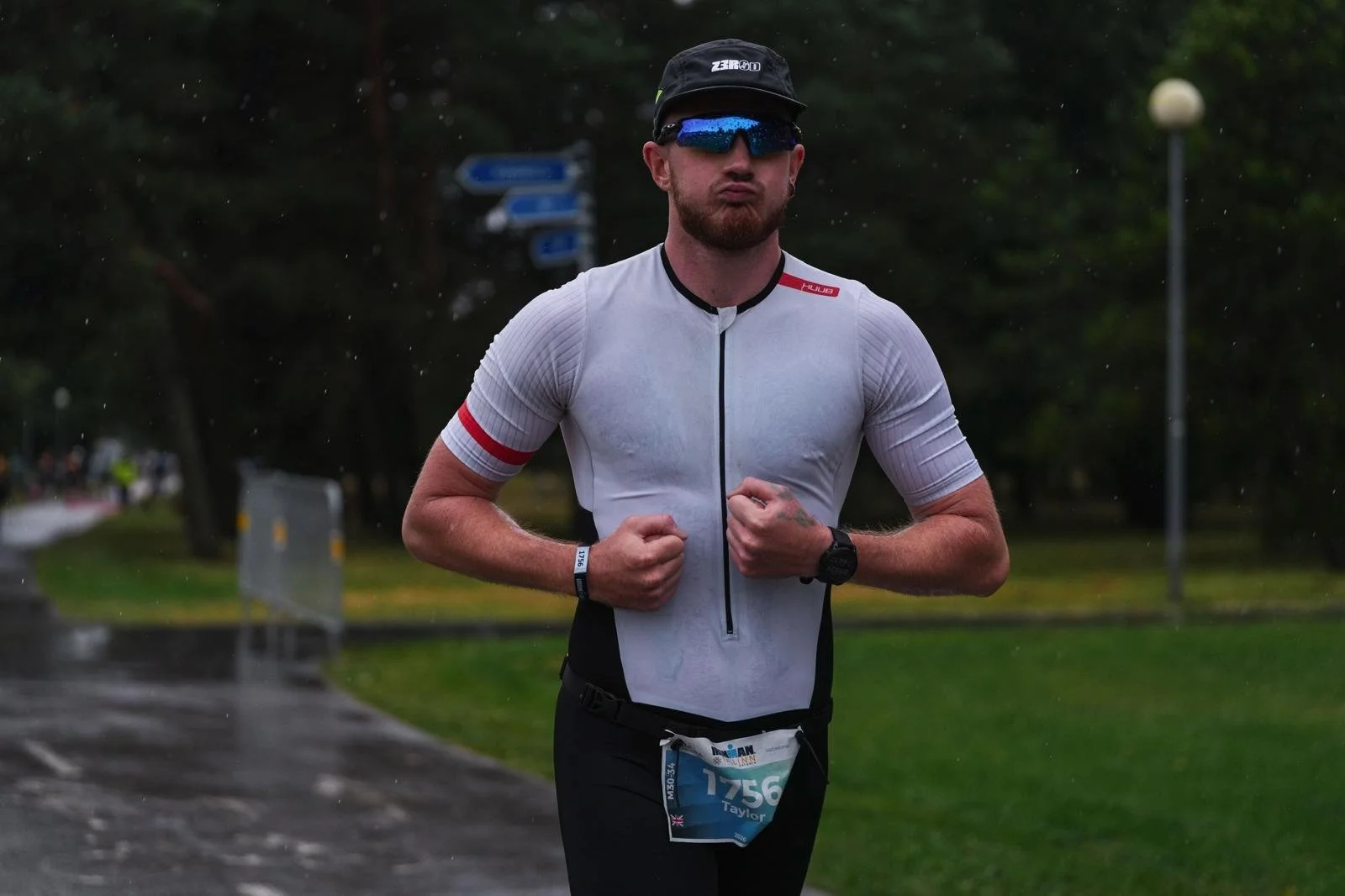
This is where Taylor's next challenge gets particularly interesting.
Having developed the endurance to complete an IRONMAN, we're going to ask his body to do something very different.
Run a 5K in 20 minutes.
That's 4:00 per kilometre pace.
The aerobic foundation developed through triathlon training will be extremely useful.
But endurance alone won't produce a 20-minute 5K.
We'll now need to develop areas including running economy, lactate threshold, speed endurance and the ability to become comfortable running significantly faster.
Training volume and intensity will need to change accordingly.
It's another example of why training should always be built around the athlete's next objective.
And Then Comes 100 Miles…
Beyond the 5K challenge sits something completely different again.
Taylor wants to tackle a 100-mile event.
And once again, everything changes.
The training changes.
The pacing changes.
The nutrition strategy changes.
The psychological demands change.
Even the definition of "fast" changes.
But the principles we've established during the journey towards Tallinn remain.
Prepare properly.
Fuel the work.
Listen to the body.
Adapt when circumstances change.
Recover before asking the body to perform again.
And have a clear purpose behind the training you're doing.
Coaching Is More Than Writing Training Sessions
It's easy to think online endurance coaching means receiving a programme telling you how far to swim, cycle or run.
That's only part of it.
Real athletes don't exist inside spreadsheets.
They have work commitments.
They sleep badly occasionally.
They get niggles.
The weather changes.
Races don't always go to plan.
Nutrition needs adjusting.
Confidence fluctuates.
And goals evolve.
That's why our approach at Unstoppabl looks at the bigger picture.
Training matters.
But so do nutrition, recovery, mobility, strength, injury management, mindset and having someone who can objectively change the plan when circumstances demand it.
Taylor's journey to completing IRONMAN Tallinn wasn't simply about becoming fit enough to cover 226 kilometres.
It was about putting all those pieces together.
Now it's time to recover properly.
Then we'll start working towards that 20-minute 5K.
And after that?
100 miles awaits.